


Anxiety is a normal part of the human experience. In fact, if we didn't have anxiety, we wouldn't be able to function in a healthy way in our daily lives. However, sometimes, anxiety becomes more long-lasting, frequent, or intense than is helpful. In those cases, we might start to have what is called an "anxiety disorder". Just like anxiety can be focused on many different things, there are many different disorders that fall under the general heading of "anxiety disorders". All of these disorders share a common thread of involving high levels of anxiety or fear that is negatively interfering with someone's life or causing them high amounts of distress. For example:
Social Anxiety Disorder
Social anxiety disorder is a disorder that involves having anxiety in situations where you might be judged in a negative or harsh way by other people. This can include things like giving presentations, making small talk, or meeting new people.
Panic Disorder
Panic disorder is a disorder that involves being particularly anxious about the possibility of having panic attacks, which are intense and fast psychological and physiological surges of discomfort. These disorders also involve avoiding situations that bring on the fear or anxiety, or getting through those situations with high amounts of distress.
Generalized Anxiety Disorder
Generalized anxiety disorder is a disorder that involves experiencing a high level of worry that feels difficult to control about a number of areas (e.g., money, work, family). It also involves a range of symptoms that come along with the worry, like muscle tension, feeling irritable, having a hard time concentrating, and having problems with sleep.
Anxiety Cycle
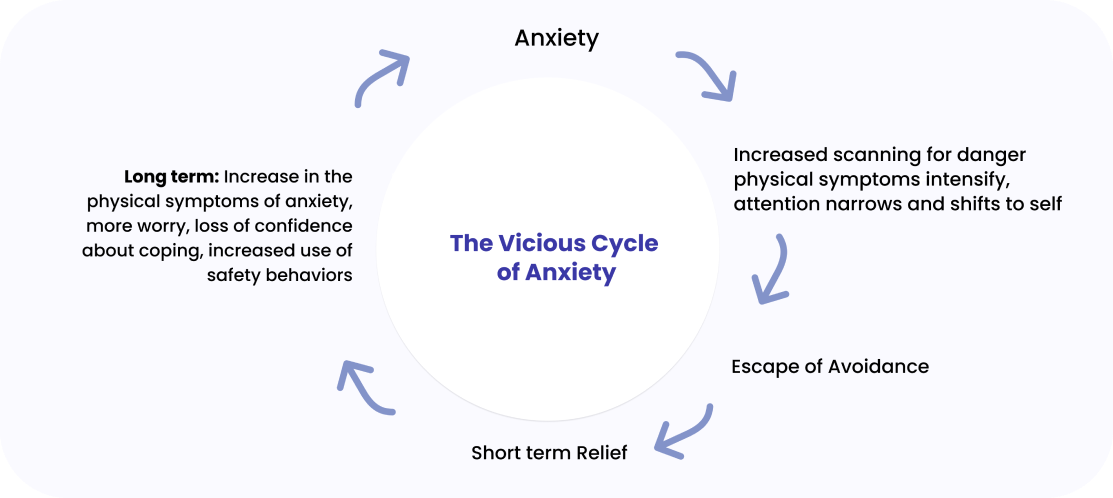
People with anxiety may try a range of strategies to cope with their anxiety that actually make anxiety worse in the long term. For example, people with anxiety may find temporary relief in anxiety through substances like alcohol and cannabis; they may also try distraction techniques, such as excessive scrolling on social media or playing video games.
However, these strategies often only help temporarily and actually make anxiety worse in the long term. They may also lead to other problems, such as social isolation or difficulty focusing on important tasks.
Cognitive Behavioral Therapy for Anxiety
Fortunately, there are several highly effective evidence based treatments for anxiety disorders that have been scientifically tested and proven to work. Cognitive behavioral therapy (CBT) is a front-line recommended treatment that is based on the theory that people with anxiety tend to make overly negative predictions or interpretations about the likelihood of something bad happening, or their ability to cope with such bad things happening. These ways of thinking make people experience more anxiety before, during, and after interacting with the things they are afraid of.
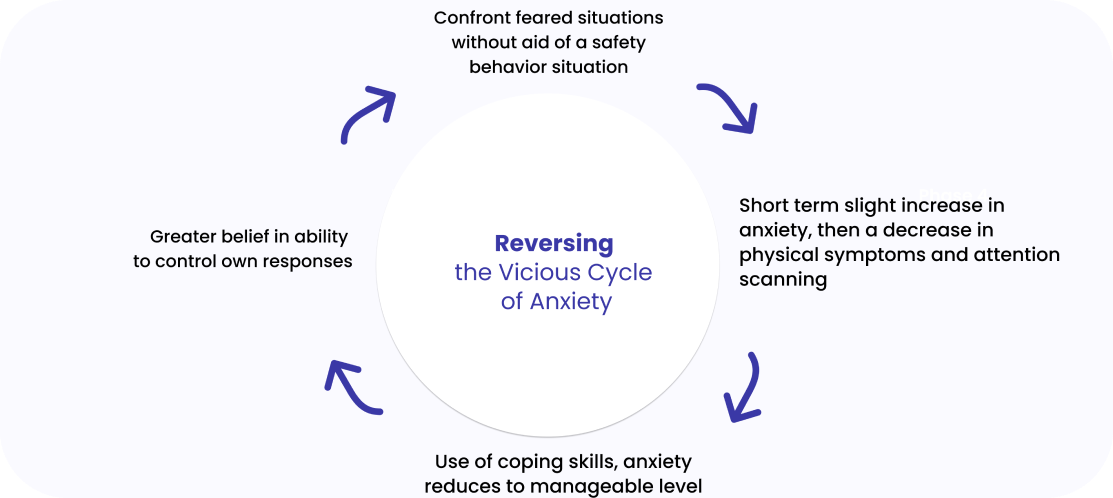
When people become more anxious, they start to avoid the things that they are afraid of. Avoiding things that make people anxious may make their anxiety better in the short term, but it actually keeps it going in the long term because it prevents people from learning that the fearful beliefs they have may not be accurate.
CBT for anxiety therefore involves working with your therapist to challenge and test out different ways of thinking about the thing(s) that drive your anxiety, and reducing avoidance so that inaccurate beliefs can be updated through your own experience.
If you are looking for support with symptoms of anxiety at this time, we would be glad to help you get connected to treatment that actually works. Visit https://www.nelliehealth.com/info-call/ to get started today.